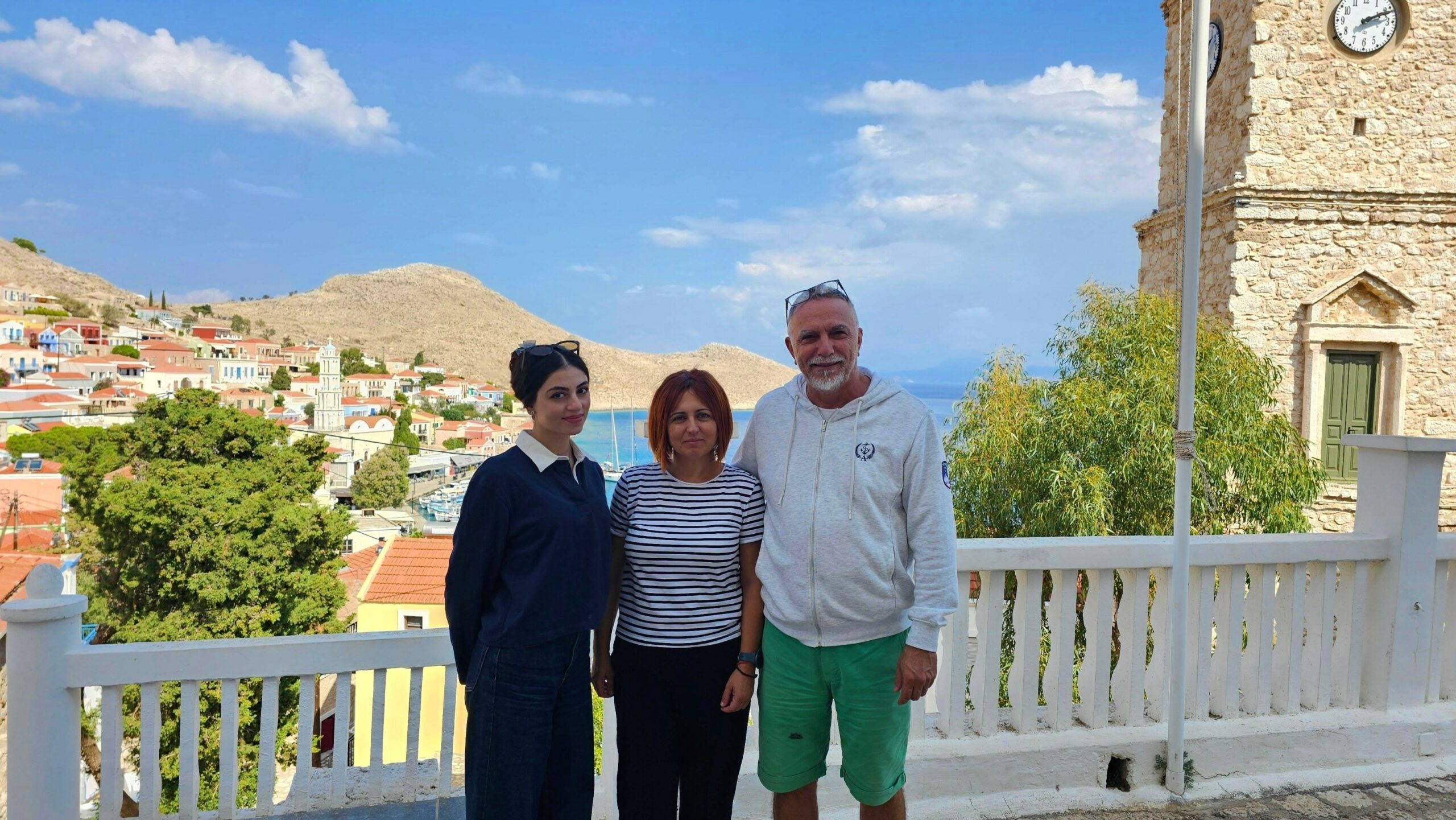
The Social Inclusion Observatory continues its field research in the Municipalities of the South Aegean for the 6th consecutive year, with this year’s primary objective shifting from the simple mapping of social needs to a more complex investigation of local variations, changes, common trends, and the potential for collaborative approaches to addressing social challenges.
In the context of the field research conducted across multiple Municipalities of the South Aegean Region, the fieldwork in the Municipality of Chalki was carried out on Wednesday, 30/09/2026, by researcher Ms. Eirini Tsopanoglou. As part of the research, interviews were conducted with Mr. Vasileios Roussakis, Vice Mayor for Economic Development and Tourism of the Municipality of Chalki, and with Ms. Angeliki Vogiatzoglou, President of the Municipal Council of the Municipality of Chalki, in her capacity as President of the Parents and Guardians Association of the Unified School of Chalki.
During the interview with Mr. Roussakis, the primary priorities highlighted were access to healthcare services, support for the elderly and families with children, as well as the creation of conditions that would allow young people to remain on the island. Particular emphasis was placed on the adequate staffing of healthcare services, especially during the summer months, when the population increases due to tourism. Concurrently, the strong seasonality of the local economy was highlighted, characterized by limited employment opportunities during the winter and increased staffing and housing needs during the summer season.
Special reference was made to Chalki’s energy transition and the utilization of solar energy, which contributes to reducing energy costs for households and businesses, highlighting it as a best practice for small islands. Insularity, bureaucracy, the Municipality’s limited technical capacity, and the need for psychological support for the residents were identified as key challenges, while at the same time, the strong solidarity of the local community in times of need was emphasized.
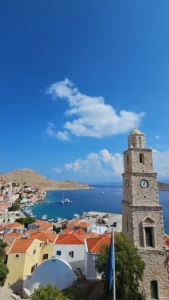 Additionally, an interview was conducted with the President of the Parents and Guardians Association of the Unified School of Chalki, Ms. Vogiatzoglou. The discussion presented the Association’s activities, whose primary objective is to support children, improve their educational environment, and provide more opportunities for creative engagement, entertainment, and education on a small island where available activities are limited. Among the main difficulties faced by the Association were limited resources, the difficulty of professional transit from Rhodes, and the need for more creative and educational activities for children, particularly during the winter.
Concurrently, the need for psychological support for children and parents was emphasized, as well as better access to medical specialties in order to minimize forced travel to Rhodes. The interview further highlighted the importance of strengthening partnerships with entities for initiatives benefiting children, families, and the elderly, particularly during the winter season when available activities on the island are limited.
Overall, the two interviews captured a complex picture of Chalki, in which the unique challenges of a small island community coexist with significant efforts toward innovation and local development.
We would like to warmly thank the Municipality of Chalki and the Parents and Guardians Association of Chalki for their participation in the research, the time they dedicated, as well as for their interest and support in the work of the Regional Social Inclusion Observatory.
(Text & photos: Eirini Tsombanoglou)

 Αυτόματος έλεγχος προσβασιμότητας δικτυακού τόπου με βάση το πρότυπο WCAG 2.1 AA και με το εργαλείο “AChecker”
